


State of Aging
Long-Term Care Imperative recognizes that to prepare for the future, we must understand where we are. The data below illustrates there is much work to be done. We invite you to join us in preparing for the future.
Changing Demographics - 65+ Population
House Districts
Senate Districts
Damaging Bureaucracy
Processing a medicaid application within 45 days is a federal guideline standard for populations of 65+
Average Number of Days to Approve Medicaid Application
Average Longest Outstanding Medicaid Application (October 2024 to September 2025)
Long-term services and supports (LTSS) Funding
Long-term services and supports (LTSS) refer to a broad range of health and health-related services and supports needed by individuals who lack the capacity for self-care due to physical, cognitive, or mental disabilities or conditions. Specifically, it can provide services in the home, assisted living settings, nursing facilities, and integrated settings that meet multiple needs.
The above demonstrates the increased strain on funding for 65+ LTSS recipients. As our aging population increases, so too will the funding needed to support each recipient.
Home and community-based services (HCBS) Funding
Home and community-based services (HCBS) provide recipients of Medicaid the ability to receive care in their home or community of choice as opposed to a facility. It can assist older adults, people with cognitive or physical disabilities, and or mental health or substance use disorders.
We, once again, find that as our aging population increases, Medicaid recipients are increasing. Per recipient spending increases alongside. Without adequate funding from government sources, these programs will only balloon in size and put communities in need at risk.
Staffing Costs per Providers
The state’s funding rate decisions directly impact the salaries of professional caregivers, the range of services a facility can provide, and the number of residents a senior community can serve.
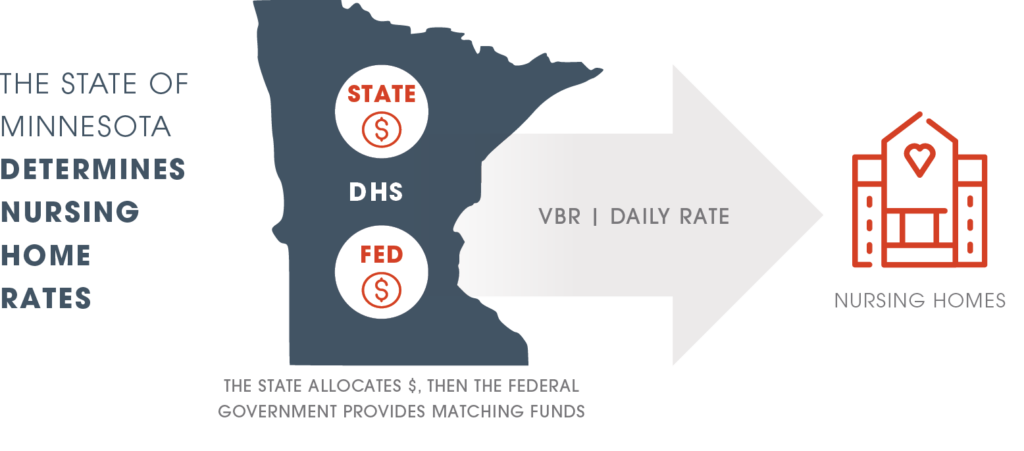
As we look to the future, we must remember that our senior population is still growing, and as a result, the demands for support and services will be expanding.
We need to continue investing in safe, quality care and a professional caregiving workforce to make sure we are ready to serve our seniors in communities across the state.